How Professional Utility Trenching Protects Your Home — Water, Sewer & Power Lines in Spokane
Most homeowners rarely think about what runs beneath their yard — until something stops working.
A slow water leak. A sewer backup. Power interruptions after heavy rain. Suddenly, the underground systems that quietly serve your home become impossible to ignore.
That’s where professional utility trenching in Spokane matters. Installing or replacing water lines, sewer lines, and underground power lines is not simply about digging a trench. It’s about protecting your home’s structure, safety, and long-term reliability — especially in a region where soil conditions and winter weather add complexity.
Understanding why trenching matters starts with understanding what it actually involves.
Avey Aexcavation
What Is Residential Utility Trenching?
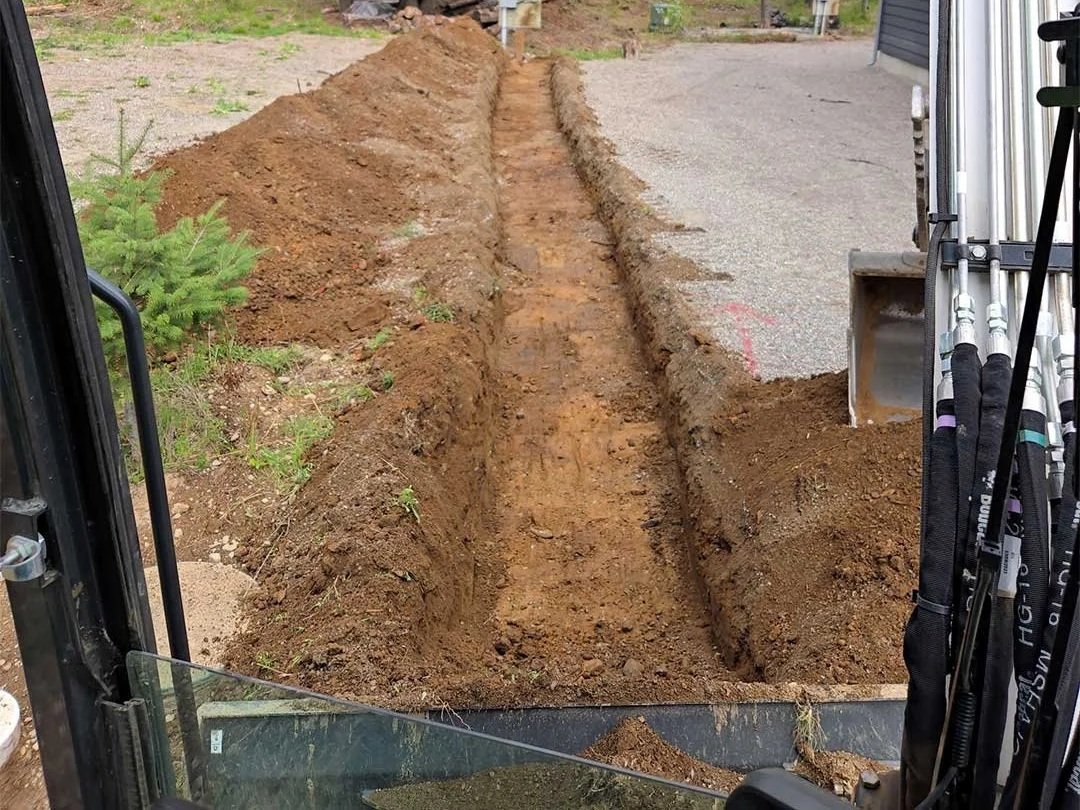
Residential utility trenching is the controlled excavation of narrow trenches to install or replace underground service lines. These typically include:
Water service lines
Sewer lateral lines
Underground electrical conduits
Gas lines, when applicable
At first glance, trenching may seem straightforward. A trench is dug, a pipe is placed, and the soil is returned. In reality, the process requires careful depth control, slope accuracy, soil evaluation, and proper compaction.
Those technical details determine whether the installation performs reliably for decades — or develops problems within a few seasons.
Water Line Trenching in Spokane: Depth and Frost Protection
Your home’s water service line must be installed below the local frost depth to prevent freezing during winter months. In Spokane, this requirement is not optional; it is essential.
Professional water line trenching ensures:
Correct burial depth below frost line
Stable trench base and proper pipe bedding
Protection from soil movement
Layered backfill and controlled compaction
If a water line is installed too shallow or without adequate compaction, freeze-thaw cycles can shift or stress the pipe. Underground leaks may go unnoticed while gradually eroding surrounding soil.
Accurate trench preparation significantly reduces these risks.
Sewer Line Trenching: Why Slope Matters
Unlike water lines, sewer lines rely entirely on gravity. That means slope is critical.
If the trench is too flat, waste will not flow efficiently. If it is too steep, liquids may outrun solids, increasing the likelihood of clogs. Professional sewer trenching requires:
Precise slope calculation
Stable trench walls
Proper pipe bedding
Inspection-ready installation
Settlement after backfilling is another common issue. When soil is not compacted in controlled layers, low points can develop in the line, leading to recurring blockages.
Correct trenching prevents those long-term complications.
Underground Power Line Trenching and Safety Requirements
Installing underground electrical service involves additional safety standards. Power conduits must meet minimum depth requirements and maintain separation distances from water and sewer lines.
Professional excavation contractors coordinate with:
Utility locating services
Licensed electricians
City permitting offices
Inspection authorities
Improper trenching can create safety hazards or code violations. Careful planning ensures electrical systems remain protected and accessible without compromising other utilities.
Spokane Soil Conditions and Why Compaction Is Critical
Soil conditions in Spokane vary significantly. Some areas contain sandy or gravel-based soils, while others consist of dense clay that expands and contracts with moisture changes.
Combine that with winter freeze-thaw cycles, and underground installations face constant environmental stress.
Professional trenching accounts for:
Soil type evaluation
Appropriate bedding material
Layered compaction techniques
Long-term settlement prevention
Improper compaction is one of the most common causes of post-installation settling. Months after trenching, homeowners may notice depressions in the lawn or shifting hardscape areas. Proper compaction minimizes these risks.
Protecting Foundations and Landscaping During Utility Installation
Utility trenching affects more than just the pipe being installed. Trench routes must be carefully planned to avoid:
Foundation footings
Drainage systems
Irrigation lines
Established tree root systems
An experienced excavation contractor evaluates these factors before digging begins. The goal is to complete the installation while preserving the structural integrity of the surrounding property.
When restoration is done correctly, long-term disruption should be minimal.
When Is Residential Utility Trenching Necessary?
Utility trenching may be required in several situations:
New home construction
Sewer lateral replacement
Water service upgrades
Installation of underground electrical service
Municipal utility connections
Repair of damaged lines
In many older Spokane neighborhoods, aging sewer and water lines eventually require replacement. Addressing these systems proactively can prevent emergency repairs and property damage.
Code Compliance and Permitting for Utility Trenching in Spokane
Utility trenching must comply with local codes governing depth, slope, material type, and compaction standards.
Professional contractors manage:
Utility locates before excavation
Required city permits
Inspection scheduling
Code-compliant installation
Compliance protects the homeowner from failed inspections, required rework, and potential liability issues. It also ensures the installation meets long-term performance standards.
Long-Term Protection Starts Below the Surface
Water, sewer, and power systems operate out of sight, but their reliability depends entirely on how they are installed.
Professional utility trenching in Spokane ensures proper depth, slope accuracy, stable bedding, and controlled compaction — all of which protect your home’s structural stability and essential services.
Once the yard is restored, the work itself may no longer be visible. However, the quality of that work continues to protect your home for years to come.