5 Things to Expect During Concrete and Structure Demolition
Demolition is more than just breaking things down — it’s a controlled process that makes way for safe, build-ready sites. In Spokane, each demolition project must balance regulations, safety, and precision. Here’s what property owners and developers can expect from start to finish.
1. Pre-Demolition Planning and Surveys
Before any equipment moves in, the project goes through detailed preparation.
Structural assessment: Engineers review the building’s design, materials, and load points.
Hazard surveys: Older Spokane buildings may contain asbestos, lead-based paint, or underground tanks that must be documented and remediated.
Permit coordination: Spokane’s Building Services Department reviews demolition plans to ensure compliance with local codes, especially for dust and waste control.
This stage defines the timeline, cost, and scope — preventing surprises once demolition begins.
2. Safety and Utility Coordination
Safety determines how and when demolition starts.
Utility coordination: Gas, power, and water are located and disconnected through coordination with Spokane Public Works and Avista Utilities.
Traffic and pedestrian planning: For commercial areas, crews establish barricades and signage to control access.
Worker protection: Contractors follow OSHA and Washington State Labor & Industries guidelines for PPE, fall prevention, and noise exposure.
Spokane’s mix of older neighborhoods and high-traffic zones makes this step essential for minimizing disruption.
3. Choosing the Right Demolition Method
Each structure requires a tailored approach based on its materials and surroundings.
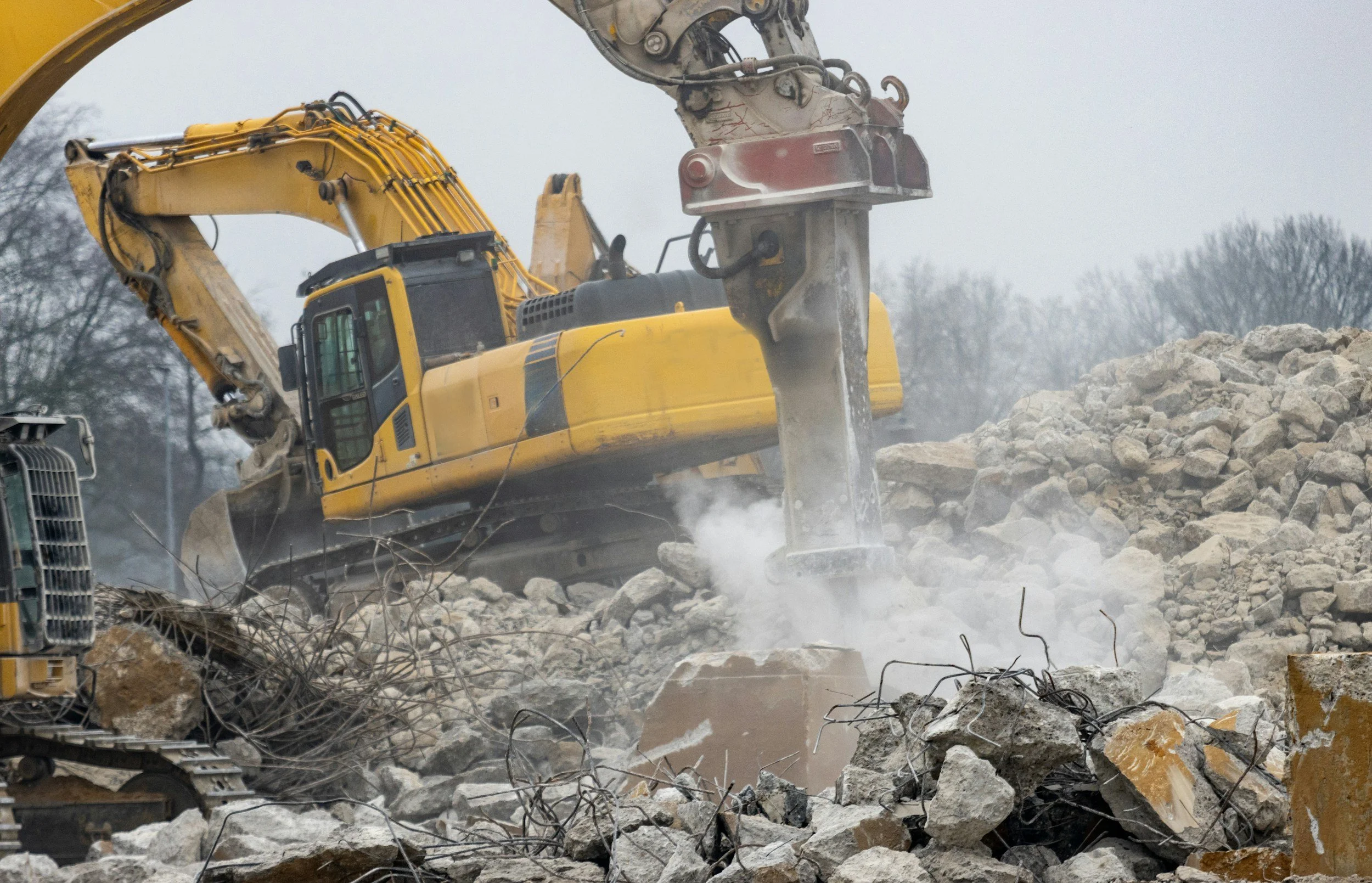
Full structural removal: Used for total rebuilds or redevelopment sites. Heavy excavators and hydraulic hammers reduce the building to manageable debris.
Selective or interior demolition: Targets specific sections while protecting adjoining areas. This is common for adaptive reuse or phased construction projects.
Foundation and concrete cutting: Specialized saws and breakers remove slabs and footings without disturbing utilities or soil stability.
The contractor’s method directly affects noise levels, dust, and project duration.
4. Material Sorting and Environmental Compliance
After the structure comes down, environmental stewardship takes priority.
On-site separation: Concrete, steel, wood, and asphalt are sorted for recycling or disposal.
Recycling benefits: Clean concrete is often crushed and reused for Spokane’s road base or fill projects.
Documentation: Contractors provide waste tracking reports as part of compliance with Spokane Regional Clean Air Agency and Ecology Department rules.
Efficient recycling keeps disposal costs low and supports Spokane’s sustainability goals.
5. Site Restoration and Next-Phase Readiness
Once debris is cleared, the site is reshaped to prepare for construction.
Rough and fine grading: Levels the site and prevents pooling or runoff.
Soil compaction testing: Ensures the ground can support new foundations.
Erosion and stormwater controls: Required under Spokane County’s environmental standards to prevent sediment runoff into nearby drainage systems.
This handoff phase transitions demolition into excavation and site preparation — the point where new construction can safely begin.
Conclusion
Concrete and structure demolition in Spokane is a structured, multi-step process focused on safety, compliance, and efficiency. From pre-demolition surveys to recycling and grading, each stage contributes to a smooth build start. Working with qualified professionals helps ensure your property is cleared properly and ready for the next phase of development.