Excavation for New Home Construction: What Happens Before the Foundation Is Poured
When most people imagine building a new home, they picture framing going up, walls taking shape, and eventually a finished structure. However, long before those visible stages begin, an essential phase takes place beneath the surface: site preparation and excavation.
Professional residential excavation in Spokane prepares the ground so that a home can be safely supported for decades. Without proper excavation, even the best-designed foundation can experience settling, drainage problems, or structural stress.
Understanding what happens before the foundation is poured helps homeowners see why excavation plays such a critical role in new home construction.
Why Excavation Is the First Step in Home Construction
Every home relies on a stable base. Before construction begins, the land must be prepared so that the foundation sits on soil capable of supporting the structure above it.
Residential excavation ensures that:
The building site is cleared and accessible
Soil conditions are evaluated
The ground is properly graded
Utilities can be installed
The foundation area is prepared correctly
These steps help prevent problems that might otherwise appear years after the home is built.
In developing areas such as Spokane Valley, Liberty Lake, and Five Mile Prairie, excavation work often begins months before framing starts.
Step 1: Land Clearing and Site Access
The first stage of most residential construction projects is land clearing.
Clearing removes vegetation, trees, and surface obstacles that prevent excavation equipment from accessing the site. Contractors may remove:
Trees and brush
Stumps and root systems
Surface rocks
Old fencing or debris
Once the site is cleared, contractors establish access routes for excavation equipment and material deliveries.
In wooded areas around Mead and North Spokane, land clearing can be one of the largest early stages of the project.
Step 2: Rough Grading and Site Preparation
After clearing, contractors perform rough grading to shape the land and establish the basic elevation of the building site.
Rough grading helps ensure that the property drains properly once the home is constructed.
This stage often involves:
Leveling the building area
Establishing drainage slopes
Preparing driveway access areas
Stabilizing soil conditions
Proper grading prevents water from collecting near the future foundation.
In Spokane’s freeze-thaw climate, directing water away from structures is especially important for long-term soil stability.
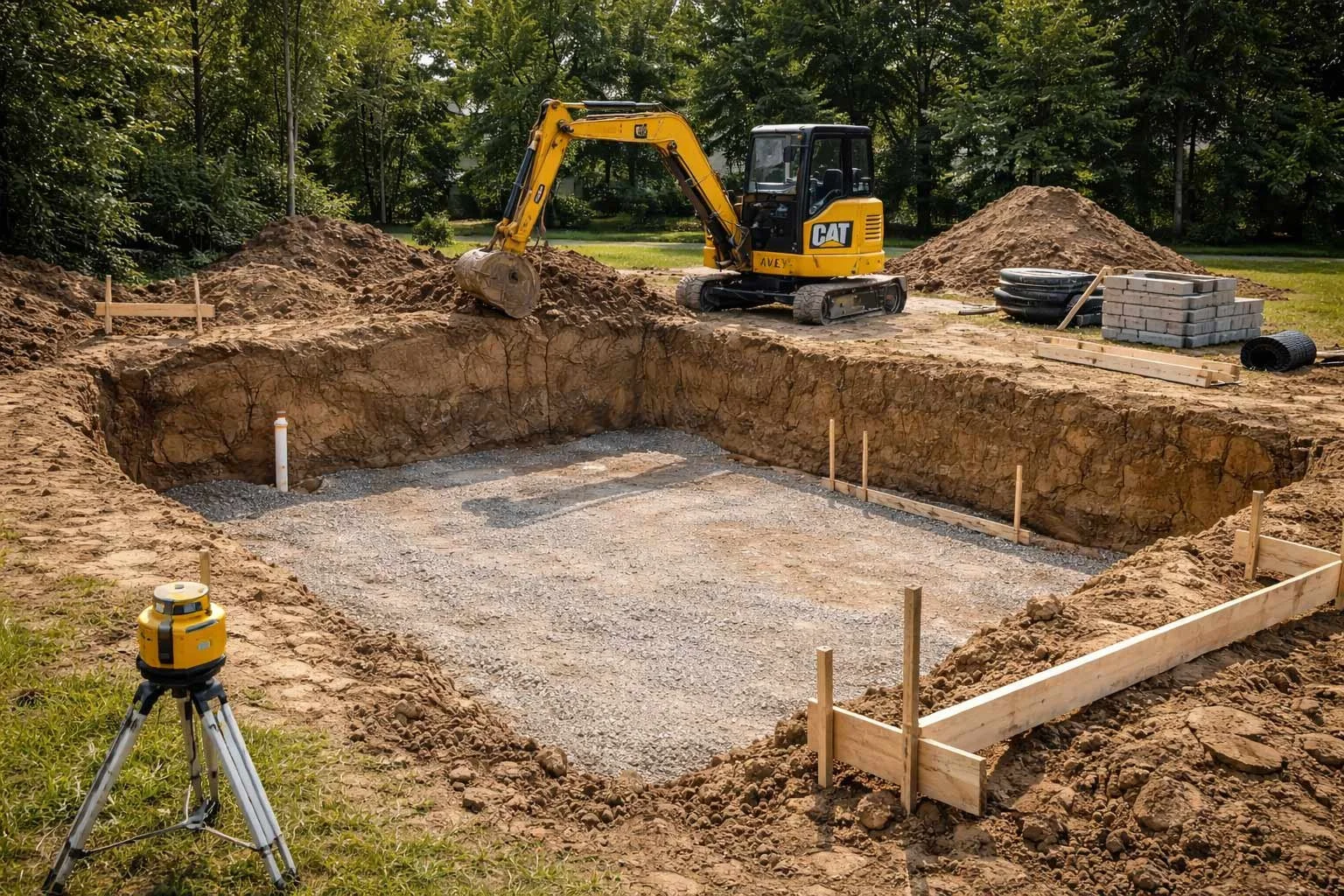
Step 3: Excavating the Foundation Area
Once the site is graded, contractors begin foundation excavation.
This process involves removing soil to the precise depth required for the foundation design. Depending on the home, excavation may create space for:
Basements
Crawlspaces
Slab foundations
Excavation must be performed carefully to ensure that the soil beneath the foundation remains stable and properly compacted.
Contractors measure depth and slope carefully to match engineering plans and building code requirements.
Step 4: Preparing the Subgrade
The subgrade is the layer of soil directly beneath the foundation. Preparing this layer correctly is critical for structural stability.
Subgrade preparation typically includes:
Removing loose or unstable soil
Compacting the remaining soil
Adjusting elevation where necessary
If the subgrade is not properly prepared, the foundation may settle unevenly over time.
Professional excavation contractors use specialized equipment to ensure the soil beneath the foundation is compacted and stable.
Step 5: Utility Trenching Before the Foundation
Before the foundation is poured, underground utilities must often be installed.
This typically includes trenching for:
Water service lines
Sewer connections
Electrical conduits
Drainage systems
Installing utilities at this stage prevents the need for future excavation around the completed home.
Utility trenching must follow local code requirements for depth, slope, and separation distances.
Professional contractors coordinate this work with local inspectors and utility providers.
Step 6: Drainage Preparation Around the Foundation
Water management is one of the most important aspects of home construction.
Before the foundation is poured, contractors often prepare drainage systems to protect the structure.
This may include:
Installing foundation drainage systems
Creating drainage trenches
Preparing gravel layers around the foundation
Adjusting grading to direct water away from the home
Proper drainage prevents water from accumulating around foundation walls.
In Spokane’s climate, where snowmelt and seasonal rains are common, drainage preparation helps protect the home from long-term moisture problems.
Step 7: Inspections Before the Foundation Pour
Local building departments require inspections before the foundation can be poured.
Inspectors typically verify:
Excavation depth
Soil stability
Utility installations
Drainage preparation
These inspections ensure the excavation work meets building code standards and engineering requirements.
Once the site passes inspection, contractors can proceed with forming and pouring the foundation.
Spokane Soil Conditions and Excavation Challenges
Excavation work in Spokane must account for the region’s varied soil conditions.
Many properties contain:
Sandy soils that drain quickly
Dense clay that retains moisture
Gravel layers
Basalt rock formations
In areas such as Five Mile Prairie and North Spokane, contractors often encounter basalt rock beneath the soil surface. Removing this material may require specialized equipment.
Evaluating soil conditions during excavation ensures the foundation rests on stable ground.
Common Mistakes That Can Affect Foundation Stability
Proper excavation helps avoid several common problems that can affect homes later.
These problems include:
Poor Soil Compaction
If soil beneath the foundation is not compacted properly, the structure may settle unevenly over time.
Incorrect Drainage Slopes
Improper grading can allow water to collect near the foundation.
Utility Installation Errors
Incorrect trenching depth or slope can lead to plumbing or drainage issues later.
Ignoring Soil Conditions
Building on unstable or saturated soil can lead to foundation movement.
Professional excavation contractors evaluate these factors before construction continues.
Why Professional Residential Excavation Matters
Excavation may not be the most visible part of a construction project, but it is one of the most important.
Proper residential site preparation in Spokane ensures that the foundation rests on stable soil, drainage systems function correctly, and utilities are installed safely.
This early work sets the stage for every phase of construction that follows.
For homeowners building in areas such as Spokane Valley, Liberty Lake, South Hill, Mead, or Five Mile Prairie, experienced excavation contractors play a critical role in preparing the property for long-term structural stability.
The Foundation of a Successful Construction Project
Every home begins with the ground beneath it.
Professional home foundation excavation in Spokane ensures that the land is properly cleared, graded, excavated, and prepared before the foundation is poured.
When excavation is performed correctly, it provides the stable base needed to support the structure for decades.
Although most of this work happens before construction becomes visible, it remains one of the most important investments in the long-term durability of a home.